
Research Article - (2026) Volume 14, Issue 1
Pattern and Effects of Left-Handedness on Medical Education among Medical Students: A Cross Sectional Study
Lamis Aziz Hameed and Raghda Isam Saleem*
*Correspondence: Raghda Isam Saleem, Department of Family and Community Medicine, College of Medicine, University of Basrah, Basrah, Iraq, Email:
Abstract
Background: The widespread use of right-handed tools and the majority of right-handed instructors create difficulties for left-handed trainees. There is limited information regarding hand preference and its effects on academic and clinical education. Our goal was to assess hand preference, self-reported dexterity, and how handedness influences training among medical students.
Materials and methods: A cross sectional study on the medical students at the College of Medicine/University of Basrah were given a specially created questionnaire. Using the Edinburgh inventory, Oldfield asked about hand preference for a variety of tasks. The pattern of handedness and the effect of left-handedness on medical performance were evaluated using the data. Groups were compared using the Chi-squared test.
Results: Of those questioned, 263 replied. The preference for writing was used to determine handedness: Left (23%), right (77%). The prevalence of left-handedness was higher in women than in men. A statistically significant correlation has been found between handedness and study grade, with the rate of left-handedness decreasing as study grades increase. Sixtythree percent of the left-handed students said that their clinical training is impacted by their handedness, and about half said that it influenced their academic training.
Conclusions: Medical students who are left-handed reported that their handedness harmed their training. These findings offer a glimpse into medical students' preferred hands and support the need to modify and enhance academic and clinical instruction for left-handed people.
Keywords
Left-handedness, Medical students, Medical training, Self-reported dexterity, Groups
Introduction
The preference for using the left hand for most skilled manual tasks is known as left-handedness. Ninety percent of people are right-handed, and roughly ten percent are left-handed [1 ].
Researchers are still trying to understand the phenomena of left-handedness, which affects about 10% of the population. Sometimes a child is predisposed to favour the left hand due to their genetic composition. Left-handed boys are slightly more prevalent than girls [2 ].
According to multiple studies, left-handedness is most prevalent in Western nations. The Netherlands, the USA, and Canada lead with around 13% of the population being left-handed [3 ].
Less than 6% of people in most Arab and Asian countries that use right-to-left writing systems are left-handed. The stigma attached to using one's left hand that is, being unclean outweighs any benefit of having spotless handwriting in Muslim nations. The right hand is used for writing, eating, and shaking hands. Traditionally lefthanded children are trained to use their right hands for these duties from an early age [4 ].
Researchers found that contrary to what was previously believed, the environment and other variables are probably more important than genetics in determining which hand we use [5 ].
Genes account for just around 25% of the individual variable in handedness; environmental factors account for 75% of the variance. Early life factors affect left-handedness [6 ].
The season of birth, cultural backdrop, the way hands are perceived visually, the impact of parents, and various other environmental elements have all been shown to affect handedness [7 ].
Some experts believe that handedness is mostly determined by environmental circumstances rather than genetics. They argue that the environment in the womb, including hormone exposure, can influence our preference for the right or left hand later in life [8 ]. Children acquire the usage of their right or left hand by observing their parents and caregivers. The question of why right-handed parents can have left-handed children on occasion isn't addressed by that, though. Some people who are naturally right-handed switch to becoming lefthanded as a result of an accident [9 ].
Because most people are right-handed and Western writing is left-to-right, left-handed people do face certain practical difficulties. A lefty has to "crab" their hand to write without contaminating the ink.
The right hand is intended to be utilized when using scissors and other tools. For example, using circular saws with the left hand instead of the right can be dangerous.
Studies have shown that those who are left-handed are more susceptible to learning problems, autism, and seizures. Other studies have not, however, independently confirmed these findings [9 ].
Materials and Methods
Study population
The study was carried out in January 2023 among medical students of the Basrah College of Medicine.
Survey instrument
A specially designed questionnaire was used to find out further regarding their sociodemographic characteristics, their score in their last academic year, their hand preference, and the effect of left-handedness on the academic and clinical performance of left-handed students.
A self-administered survey was distributed to the students via their classes. Names were not required to be written on the questionnaire to protect respondents' answers from biases and to ensure confidentiality.
Statistical analysis
The Statistical Package for Social Sciences (SPSS) 24 software program was used for statistical analysis, coding the questionnaires, frequency calculations, and Chi-square analysis to look for relationships between categorical variables.
Results
Socio-demographic characteristics
A total of 263 students participated in this study and the sociodemographic characteristics of the participants and their scores in the last academic year are shown in Table 1.
| Variables | Total (n=263) | ||
| N | % | ||
| Gender | Male | 95 | 36.1 |
| Female | 168 | 63.9 | |
| Age (Y) | Mean ± SD | 20.8 ± 1.67 | |
| Range | 18-29 | ||
| Grade | 2nd | 70 | 26.6 |
| 3rd | 75 | 28.5 | |
| 4th | 66 | 25.1 | |
| 5th | 23 | 8.7 | |
| 6th | 29 | 11 | |
| Residency | Urban | 183 | 69.6 |
| Rural | 80 | 30.4 | |
| Last year score | Failed | 10 | 3.8 |
| Poor | 58 | 22.1 | |
| Fair | 68 | 25.9 | |
| Good | 75 | 28.5 | |
| Very good | 39 | 14.8 | |
| Excellent | 13 | 4.9 | |
Table 1: The sociodemographic characteristics of the studied population.
About two-thirds (63.9%) of the students who took part in this study were females with their number at 168 when compared to males who were 95. The participants, ages ranged from 18 to 29 years with a mean ± SD=20.8 ± 1.67. The highest number of respondents belonged to the second, third, and fourth grades with a total of 211 out of 263.
The highest percentage of the students were residents in urban areas (69.6%), more than half of the participants scored fair and good in their last academic year constituting 25.9% and 28.5% respectively.
Figure 1 shows that more than seven out of ten pupils (77%) were right-handed, whereas 23% were left-handed.
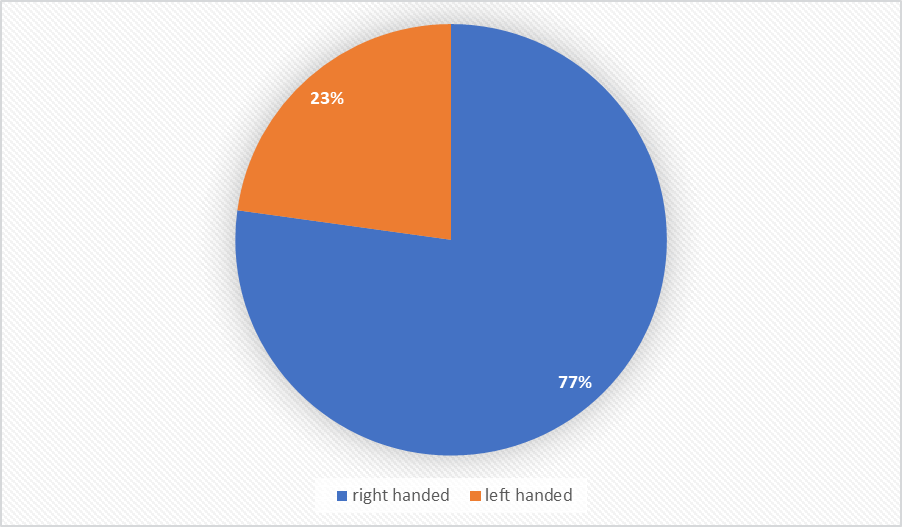
Figure 1: The dominant hand distribution.
Comparing the difference in handedness for each grade, the highest percentages of left-handedness were observed among the second and third-grade students at 24% and 14% respectively, while the lowest was reported for the sixth-grade students (4%) (Figure 2).
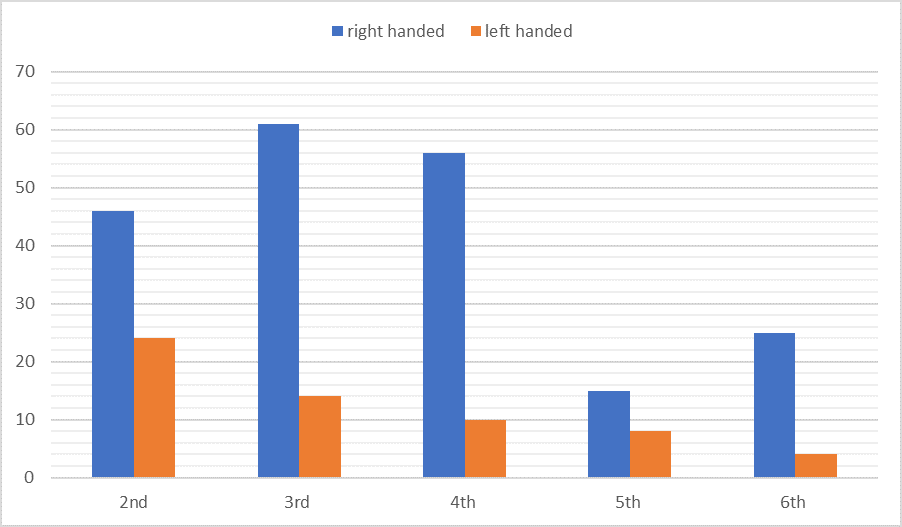
Figure 2: The percentage of handedness among students in each grade.
Table 2 shows the effect of handedness on the daily activities, and academic and clinical practice of lefthanded students, half of the left-handed participants answered yes to the question does being left-handed affect your daily activities, 46.6% of them reported that being left-handed affects their academic life and approximately three quarters (73.3%) said it affects their medical practice in the clinical sessions.
| Variables | Total (n=60) | ||
| N | % | ||
| Does being left-handed affect your daily activities | Yes | 30 | 50 |
| No | 30 | 50 | |
| Does being left-handed affect your academic life in college | Yes | 28 | 46.6 |
| No | 32 | 53.4 | |
| Does being left-handed affect your medical practice in the clinical sessions | Yes | 44 | 73.3 |
| No | 16 | 26.7 | |
Table 2: The effect of left-handedness on the academic and clinical practice.
As shown in Table 3 there is a statistically significant association between handedness and the study grade, there is a non-significant relationship with all other variables.
| Variables | Right-handed | Left-handed | Total (n=263) | P-value | |
| N (%) | N (%) | N (%) | |||
| Gender | Male | 67 (70.5) | 28 (29.5) | 95 (100.0) | 0.053 |
| Female | 136 (81.0) | 32 (19.0) | 168 (100.0) | ||
| Age (Y) | Mean ± SD | 20.83 ± 1.69 | 20.72 ± 1.56 | 20.8 ± 1.67 | 0.65 |
| Grade | 2nd | 46 (65.7) | 24 (34.3) | 70 (100.0) | 0.023 |
| 3rd | 61 (81.3) | 14 (18.7) | 75 (100.0) | ||
| 4th | 56 (84.8) | 10 (15.2) | 66 (100.0) | ||
| 5th | 15 (65.2) | 8 (34.8) | 23 (100.0) | ||
| 6th | 25 (86.2) | 4 (13.8) | 29 (100.0) | ||
| Residency | Urban | 139 (76.0) | 44 (24.0) | 183 (100.0) | 0.472 |
| Rural | 64 (80.0) | 16 (20.0) | 80 (100.0) | ||
| Last year score | Failed | 7 (70.0) | 3 (30.0) | 10 (100.0) | 0.34 |
| Poor | 41 (70.7) | 17 (29.3) | 58 (100.0) | ||
| Fair | 52 (76.5) | 16 (23.5) | 68 (100.0) | ||
| Good | 57 (76.0) | 18 (24.0) | 75 (100.0) | ||
| Very good | 34 (87.2) | 5 (12.8) | 39 (100.0) | ||
| Excellent | 12 (92.3) | 1 (7.7) | 13 (100.0) | ||
Table 3: The relationships between handedness and other variables.
Discussion
The frequency of left-handedness among medical students at Basrah College of Medicine is investigated in this article. Overall, the percentage of left-handed students was 23%.
The prevalence of left-handedness has been repeatedly reported to be around 10%, while estimates of heritability have been around 25%. Approximately 8% of the human population is left-handed. It is inherited rather than environmental, and an adoption study indicates that it runs in families.
This study found that although there was no significant relationship between gender and handedness, female medical students were more likely than male students to be perceived as left-handed. This runs as opposed to previous research showing a preference for guys.
The results of this study indicated that left-handedness became less common as students' grades increased. This is consistent with a study that found that respondents who were left-handed had changed their hand preferences, possibly due to peer pressure, and that right-handed writing increased with age. The findings of the research showed that as study grades increased, the prevalence of left-handedness declined. These results are consistent with research conducted on medical and dental students.
Most of the left-handed pupils resided in urban areas. The fact that about 69.6% of the students who participated in this survey reside in cities means that no conclusions concerning the prevalence of lefthandedness in their place of residence can be drawn. Furthermore, although social context can influence hand choice, it is unclear whether culture alone determines it. If handedness is socially built, left-handedness should be more common in at least one culture than the other, but this study does not seem to support that theory.
The Edinburgh Inventory by Oldfield was used to measure and analyze handedness. It is becoming more common to categorize people according to a continuous dimension of hand preference for different tasks including writing, throwing, sketching, stitching, brushing the teeth, or opening a lid. This study supports the findings of other studies in which medical students who identify as left-handed stated that their handedness had a more negative effect on their training, and it makes a case for enhancing and modifying surgical instruction for left-handed people. Surgery is a challenging subject for left-handed trainers and students. Left-handed surgeons may have fewer learning challenges if they receive early laterality-related mentoring during medical school and their surgical residency, along with lefthanded equipment. About half of the left-handed participants in this study stated that their lefthandedness did affect their academic performance. Another study on students in Nigeria revealed that some students use their left hand for everyday tasks like writing and drawing, among many other things, and that most parents and teachers attempt to switch left-handed students to right-handedness.
Conclusion
Approximately one-quarter (23%) of students who participated in this study were left-handed. Lefthandedness affects the daily activities, and academic training of half of the participants, approximately threequarters of them reported difficulties in their clinical training. The rate of left-handedness decreases as the study grade increases, the relationship between lefthandedness and the study grade is statistically significant.
Recommendations
This study contends that left-handed students have challenges in their academic and clinical training programs. Future study is necessary to identify these challenges and alert the trainers to them so they can try to address them. Early on in their training, it could be advantageous to purposefully connect left-handed residents with left-handed faculty trainers to provide mentorship and information about working left-handed. For left-handed pupils, some techniques and tools can be adjusted to make training easier.
References
- Ocklenburg S, Beste C, Arning L. Handedness genetics: Considering the phenotype. Front Psychol 2014; 5:1300.
[Crossref] [Google Scholar] [PubMed]
- Zheng M, McBride C, Ho CS, et al. Prevalence and heritability of handedness in a Hong Kong Chinese twin and singleton sample. BMC Psychol 2020; 8:1-2.
[Crossref] [Google Scholar] [PubMed]
- McManus IC. The inheritance of left-handedness. Ciba Found Symp 1991; 162:251-267.
[Crossref] [Google Scholar] [PubMed]
- Ademola O, Kofoworola O, Omotayo O, et al. The prevalence of left-handedness among medical and dental students in the University of Lagos-Nigeria. Middle East J Sci Res 2011; 8:288-293.
- Singh R, Singh AR. Handedness and gender differences in spatial abilities. The Anthropologist 2003; 5:113-118.
- Galobardes B, Bernstein MS, Morabia A. Can the declining prevalence of left-handedness with age be due to smoking?. Eur J Public Health 2001; 11:352-353.
[Crossref] [Google Scholar] [PubMed]
- Oldfield RC. The assessment and analysis of handedness: The Edinburgh inventory. Neuropsychologia 1971; 9:97-113.
[Crossref] [Google Scholar] [PubMed]
- Callahan D, de Virgilio C, Tillou A, et al. Medical student hand preference, perceived dexterity, and impact of handedness on training. J Surg Res 2016; 204:114-117.
[Crossref] [Google Scholar] [PubMed]
- Tchantchaleishvili V, Myers PO. Left-handedness a handicap for training in surgery?. J Surg Educ 2010; 67:233-236.
[Crossref] [Google Scholar] [PubMed]
Author Info
Lamis Aziz Hameed and Raghda Isam Saleem*
Department of Family and Community Medicine, College of Medicine, University of Basrah, Basrah, IraqCitation: Lamis Aziz Hameed, Raghda I Saleem, Pattern and Effects of Left-Handedness on Medical Education among Medical Students: A Cross Sectional Study, J Res Med Dent Sci, 2026, 14 (1): 008-012.
Received: 21-Nov-2024, Manuscript No. JRMDS-24-153023; , Pre QC No. JRMDS-24-153023 (PQ); Editor assigned: 25-Nov-2024, Pre QC No. JRMDS-24-153023 (PQ); Reviewed: 09-Dec-2024, QC No. JRMDS-24-153023; Revised: 09-Jan-2026, Manuscript No. JRMDS-24-153023 (R); Published: 16-Jan-2026